Dec 4, 2025
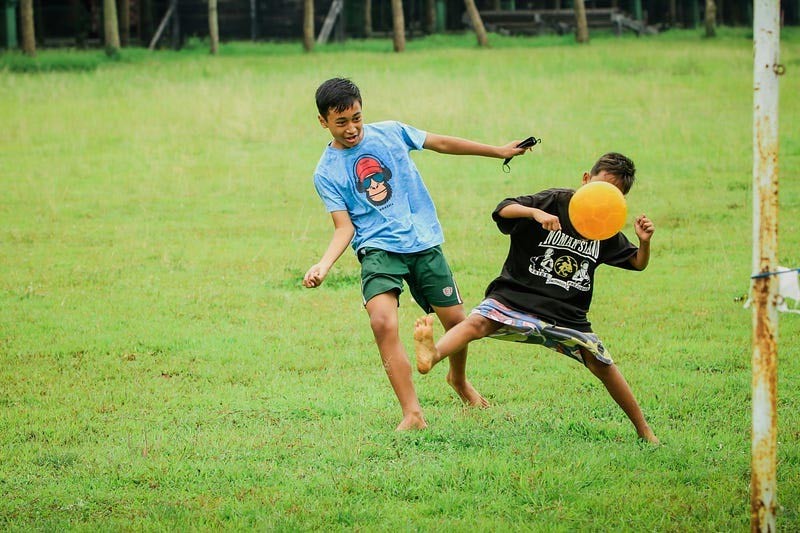
If we remove barriers — sensory, social, structural — we don’t just increase participation. We expand belonging.
When the desire to play is there — but the door is half-closed
Hayley is 15 and loves dance. At home, with furniture pushed aside and music coming from a phone, movement feels natural and joyful. In the studio, though, bright lights, fast routines, and rapid instructions pile up into overwhelm. Hayley can look “fine” on the outside while their body and brain are working overtime just to keep up — and the collapse comes later at home.
That story is echoed in new Australian research from the Aspect Research Centre for Autism Practice. The study surveyed 169 parents of autistic children and 103 autistic adults. The headline finding? About three in four autistic children want to do more sport or physical activity, and so do most autistic adults. Motivation isn’t the problem — access is.
The research lays out a set of common, avoidable barriers that stop autistic people from participating in sport, dance, and physical recreation. These include:
Fast-paced or unpredictable environments that are hard to process in real time.
Rigid structures and inflexible rules with little room for personal pacing or alternative participation.
Lack of autism-informed coaching — good intentions but limited training.
Competition-first programs with few low-pressure or skill-building options.
Sensory discomfort from uniforms, equipment, noise, lighting, crowds, or echoing gyms.
Anxiety, overwhelm, and performance pressure.
Social communication differences that affect team dynamics or how instruction is understood.
Exclusion or misunderstanding from peers, coaches, or systems. ABC
The striking part is what happens over time. While 91% of autistic kids had tried organized sport at some point, only about 49% of autistic adults were participating currently. The desire didn’t drop — people were pushed out by environments that didn’t adapt.
That matches wider evidence: autistic people often face layered sensory, motor-coordination, and social-fit challenges in typical sport settings, so participation depends heavily on whether activities are designed with those realities in mind.
Practical meaning for educators and caregivers
Let’s translate this into everyday “what can we do Monday morning?” moves.
1. Start from curiosity, not compliance
If a child avoids sport or dance, it’s easy to assume they’re “not interested.” This research strongly suggests otherwise. Ask:
What part feels hard?
When does it feel easiest? (home? smaller groups? certain music?)
What would make this feel safe or fun?
When adults treat the child as the expert on their own experience, we find the real friction points.
2. Make “flexibility” the default
A flexible program doesn’t mean lowering expectations. It means widening the pathways. Examples:
Choice of roles: participant, helper, observer-then-join, solo track, partner track.
Predictable routines: visual schedules or “first-then” sequences.
Pacing options: short drills with breaks, or repeating a skill until comfortable.
Rules as scaffolds, not traps: teach the rule and the reason for the rule; allow practice in slow motion before full speed.
3. Design for sensory comfort
Small changes can unlock big participation:
Offer uniform alternatives (soft fabrics, tag-free, different fits).
Provide quiet corners or noise-reducing supports.
Use clear, layered instruction: say it, show it, let them try it.
Reduce overload by controlling light, echo, crowd density, or music volume when possible.
4. Train coaches and leaders in autism-informed practice
The article highlights a major gap: many coaches want to help, but lack training. Even a short neurodiversity-aware coaching module can shift outcomes by improving communication styles, expectations, and sensory planning.
Here’s where this becomes a Burble Creativity story.
Movement isn’t just exercise. For many autistic kids, it’s a sensory language — a way to regulate, express emotion, and explore identity. Dance in a lounge room works for Hayley because the environment turns movement into play: familiar textures, controllable sound, predictable space, friend beside them. That’s sensory safety breeding imagination. ABC
When we craft sensory-friendly spaces, we’re basically saying:
“Your body belongs here. Your way of moving is valid. Let’s build a world that fits you.”
And imagination thrives in that message. Because once a child is not busy surviving the environment, they can:
experiment with new motor patterns,
take creative risks,
join peers on their terms,
and experience the deep joy of “kid things.”
So inclusion in sport and dance is not a “bonus.” It’s a pathway to play, confidence, and creative self-storytelling — the stuff that shapes lifelong wellbeing.
Autistic children and adults are telling us clearly: “We want to be there. Help the space meet us halfway.”
If we remove barriers — sensory, social, structural — we don’t just increase participation. We expand belonging. And belonging is fertile ground for learning, growth, and creativity.